Showing posts with label disorders. Show all posts
12 April 2012 0 comments By: The Realjazz

Herbal Index Oregon Grape Root


 Oregon Grape Root (Mahonia aquifolium)
Kingdom: Plantae
Division:Magnoliophyta
Class:Magnoliopsida
Order:Ranunculales
Family: Berberidaceae
Genus: Mahonia
Species:  Mahonia aquifolium


Constituents:
alkaloids (such as, berberine, berbamine, and hydrastine), tannins

Vitamins:


Photo by Ragesoss
C- Also known as Ascorbic acid this is one of the most effective and safest nutrients. It is a water soluble vitamin. It is a powerful antioxidant for the synthesis of collagen which helps to make blood vessels and keep the bodies muscles strong. The human body doesn’t have the capacity to generate Vitamin C. Therefore, it needs to


Actions:
This herb is known for purifying the blood and cleansing the liver.
May be good for the following disorders:

  • Any Skin condition from acne to psorasis

There has not been sufficient study by the FDA of Oregon Grape Root (Mahonia aquifolium)   to say that it is good for the use of all the conditions mentioned above. Please read my legal disclaimer.

Sources
Prescription’s for Nutritional Healing by Phyllis A Blach CNC. If you like this information please support the publisher.
www.wikipidiea.com
06 April 2012 0 comments By: The Realjazz

Herbal Index: Nutritional information for Cayenne pepper ( Capsicum frutescens or C. annum)

Cayenne pepper ( Capsicum frutescens or C. annum)
By H. Zell
Kingdom: Plantae
(unranked):Angiosperms
(unranked):Eudicots
(unranked) : Asterids
Order: Solanales
Family: Solanaceae
Genus: Capsicum
Species:  C. frutescens


Constituents:
Alpha-pinene, beta-ionone, beta-carotene, beta- sitosteral, caffeic acid, camphor, capsaicin, caryophyllene, chlorogenic acid, citric acid, cryptoxanthin, hesperidin, kaempferol, limonene, luten, myristic acid, 1, 8-cineole, p-coumaric acid, quercetin, scipoletin, stigmasterol, and zeaxanthin.

Vitamins:
B1- Also known as thiamine which helps the body turn carbohydrates to glucose which give the body energy. This vitamin helps the body break down fats and proteins. . In addition to this vitamin maintains the muscle tone along the wall of the digestive tract and promotes the health of the nervous system, skin, hair, eyes, mouth, and liver. It also improves the bodies ability to withstand stress and is often called "anti-stress" vitamin.
B2- Also known as Riboflavin which plays a significant role in the production of energy. It helps in conversion of carbohydrates to sugar, which fuels the body function. Riboflavin has an active part in the electron transport chain that produces cellular energy. It also helps in the processing of amino acids and fats. It can also serve as antioxidant, which slackens the pace of ageing.
Photo by Ragesoss
B3- Vitamin B3 also known as Niacin. Niacin is essentially used to lower high cholesterol levels as well as aids the functioning nervous system ; in the metabolism of carbohydrates, fats, and proteins; and in the production of hydrochloric acid for the digestive system. It is also involved in the normal secretion of bile and stomach fluids, and in the synthesis of sex hormones.
B6- also known as Pyridoxamine. This water soluble vitamin is helpful in treating vast number of problems related to heart, skin, depression, fatigue, nervous system and so on.
C- Also known as Ascorbic acid this is one of the most effective and safest nutrients. It is a water soluble vitamin. It is a powerful antioxidant for the synthesis of collagen which helps to make blood vessels and keep the bodies muscles strong. The human body doesn’t have the capacity to generate Vitamin C. Therefore, it needs to receive it through foods and other supplements.
E- also known as tocopherol powerful anti oxidant; protecting the cells from free radical damage (i.e. damage caused by pollution, smoke, chemicals, stress, etc). It plays a vital role in the normal functioning of the nerve cells.The vitamin influences the reproductive system too and is often called the ‘anti sterility’ hormone. It´s also known to protect the heart and stave off cardiovascular diseases.
Being a potent free radical, it has the potential to prevent the development of cancer.

Nutrients:

Photo by Venkatakumarsahu

  • Amino acids
  • calcium
  • essential fatty acids
  • folate
  • iron
  • magnesium
  • phosphorus
  • potassium
  • zinc

Actions:
Fights inflimation, aids digestion, stops bleeding ulcers and improves circulation. Acts as a catalyst for other herbs. Good for the heart, kidneys, lungs, pancreas, spleen, and stomach.
May be good for the following disorders:
  • arthritus
  • rhueumatism
  • colds
  • sinus infections
  • sore throats
  • good for pain when applied topically
  • used with lobelia for nerves

There has not been sufficient study by the FDA of Cayenne pepper ( Capsicum frutescens or C. annum)  to say that it is good for the use of all the conditions mentioned above. Please read my legal disclaimer.

Sources
Prescription’s for Nutritional Healing by Phyllis A Blach CNC. If you like this information please support the publisher.
www.wikipidiea.com
05 April 2012 0 comments By: The Realjazz

Herbal Index: Nutritional information for Ginger (Zingiber offcinale)


Ginger (Zingiber offcinale)
Photo From www.herbcompanion.com
Kingdom: Plantae
clade:Angiosperms
clade:Monocots
clade: Commelinids
Order: Zingiberales
Family: Zingiberaceae
Genus: Zingiber
Species:Z. officinale

Constituents:
Alpha-pinene, beta-ionone, beta-carotene, beta- sitosteral, caffeic acid, camphor, capsaicin, caryophyllene, chlorogenic acid, citral, curcumin, farnesol, ferulic acid, gereniol, gringerols, lecithin, 1, 8-cineole, and zingrerone.

Vitamins:
  • A -Also known as retinal helps your eyes adjust to the light and the dark and helps keep your eyes, mucous membranes and skin moist. This vitamin is also a antioxidant which helps remove free radicals from your body. This vitamin is Fat soluble. (found in ground ginger)
  • B1- Also known as thiamine which helps the body turn carbohydrates to glucose which give the body energy. This vitamin helps the body break down fats and proteins. . In addition to this vitamin maintains the muscle tone along the wall of the digestive tract and promotes the health of the nervous system, skin, hair, eyes, mouth, and liver. It also improves the bodies ability to withstand stress and is often called "anti-stress" vitamin.
  • B2- Also known as Riboflavin which plays a significant role in the production of energy. It helps in  conversion of carbohydrates to sugar, which fuels the body function. Riboflavin has an active part in the electron transport chain that produces cellular energy. It also helps in the processing of amino acids and fats. It can also serve as antioxidant, which slackens the pace of ageing.
  • B3- Vitamin B3 also known as Niacin. Niacin is essentially used to lower high cholesterol levels as well as aids the functioning nervous system ; in the metabolism of  carbohydrates, fats, and proteins; and in the production of hydrochloric acid for the digestive system. It is also involved in the normal secretion of bile and stomach fluids, and in the synthesis of sex hormones.
  • B6- also known as Pyridoxamine. This water soluble vitamin is helpful in treating vast number of problems related to heart, skin, depression, fatigue, nervous system and so on.
  • C- Also known as Ascorbic acid this is one of the most effective and safest nutrients. It is a water soluble vitamin. It is a powerful antioxidant for the synthesis of collagen which helps to make blood vessels and keep the bodies muscles strong. The human body doesn’t have the capacity to generate Vitamin C. Therefore, it needs to receive it through foods and other supplements.
Nutrients:
Photo By Rajeshodayanchal
  • Amino acids
  • calcium
  • essential fatty acids
  •  iron
  •  magnesium
  •  manganese
  •  phosphorus
  •  potassium
  • selenium
  •  zinc


Actions:
Fights inflimation, cleanses the colon, reduces spasms and cramps, and stimulates circulation. A strong anti-oxidant and effictive anti-microbial agent for sores and wounds. Protects liver and stomach.


May be good for the following disorders:
  • Bowel disorders
  • circulatory problems
  • arthritus
  • fever
  • headache
  • hot flashes
  • indegestion
  • morning sickness
  • motion sickness
  • muscle pain
  • nausea
  • vomiting
  • flatulence
There has not been  sufficient study  by the FDA of  Ginger (Zingiber offcinale)  to say that it is good for the use  of all the conditions mentioned above. Please read my legal disclaimer.

Sources
Prescription’s for Nutritional Healing by Phyllis A Blach CNC. If you like this information please support the publisher.
www.wikipidiea.com

04 March 2012 0 comments By: The Realjazz

Preparations for Herbal Remedies Recipes (Tinctures, Oils, Ointments & Baths)


Preparations for Herbal Remedies Recipes 
The´re many various  preparations for herbal remedies recipes each one is particular to ailments. I believe it to be important to go over the  preparations for herbal remedies recipes  so when I post a herbal remedies recipes you will have a guide on the best way to prepare your herbs for that disorder. The various  preparations for herbal remedies recipes  are as follows:
  1. Tinctures
  2. Herbal oils 
  3. Ointment
  4.  Herbal baths 
  5.  Herbal Sitz bath
  6.  Mineral Bath
  7.  Herbal Foot Bath
Preparations for Herbal Remedies Recipes : Tinctures (Extracts)

Herbal extract for eucalyptus.
Tinctures are much more concentrated than teas and can easily assimilated.
Directions for the  preparations for herbal remedies recipes : Mix 8 oz. dried/ cut herbs, or 4 oz.powdered herb to 16 oz. (1 pint) of alcohol. (Alcohol must be at least 80 proof. Vodka or Everclear brands are recommended.) Age 14 days, shaking bottle 2-4 times a day, gently mixing well. (Some believe it´s best to go by phases of the moon, starting on the new moon and ending on the full moon.) After 14 days, strain and pour into amber glass bottles and cap tightly. Tinctures will keep tis way indefinitely with little loss of potency. It is the ideal way to store herbs if you want them to last. if you do not want to ingest the alcohol, simply add your tincture dose to a cup of hot water. The alcohol will dissipate into the air.

Preparations for Herbal Remedies Recipes : Herbal Oils
Directions for the  preparations for herbal remedies recipes : Cover desired amount of fresh or dried herbs with olive oil. Keep in warm place for 2-3 weeks or warm on low heat for 1 1/-2 hours, stirring occasionally.(Do no Boil.) Strain and press oil from herbs. Store in refrigerator to keep from spoiling.( Add vegetable glycerine to keep for longer periods.)

Herbal Preparations: Ointment
A mix of herbs in ointment form
Directions for the  preparations for herbal remedies recipes : Cover desired amounts of herbs with olive oil( tallow or lanolin can be used if you don´t mind using animal products.) Gently warm on low heat for 1 1/2-2 hours, stirring occasionally. Strain and add melted beeswax to reach the desired density An ointment of cocoanut oil or cocoa butter can be made simply by heating herbs in melted oil and straining. This ointment must be kept cool ( Not exceeding 80ºF) or it will melt.


Preparations for Herbal Remedies Recipes : Herbal Baths

Lady taking a herbal bath
The skin is the largest organ of the body. It eliminates at least 2 lbs of toxins a day. Therefore it is an extremely important organ for eliminating wastes and toxins from the body and promoting good health. Herbal baths help to open skin pores and promote perspiration which assists the body during fevers, eliminating heavy metals and poisons from the body.
Directions for the herbal preparations: Before bathing, brush skin with a natural bristle brush or loafa sponge. Drink herbal teas ( Catnip, Yarrow, Nettle) while bathing.

Preparations for Herbal Remedies Recipes Preparations for Herbal Remedies Recipes : Herbal Sitz Baths
Directions for the  preparations for herbal remedies recipes :Soak 4-8 oz. of dried herbs ( Catnip, Yarrow, Nettle) or a gallon-size container full of fresh herbs in cold water for a least 12 hours. Heat up without boiling. Strain and add to bath water. (Soak in it for 20-30 minutes) This is great for pregnant mothers and to speed recovery in any illness

 Herbal Preparation: Mineral Bath 
A nice spa for taking a Mineral bath
Directions for the  preparations for herbal remedies recipes :(For radiation or heavy metal poisoning.) Add 2 lbs. Epsom salts to hot bath water. Soak for 1 hour and then drain. Add 2 lbs. baking soda to hot bath water and soak for 1 hour. Drink Bugleweed / Yellow Dock combination and Yarrow tea while in the bath.


Herbal Preparations: Herbal Foot Bath
Same as Herbal Baths but use half of as much herbs.

Note the information above is based on information form Herbs to the Rescue Herbal First Aid Hand Book written by Kurt King M.H. Published by Doctor Christopher Publications please if you have more interest please support this publication http://www.christopherpublications.com/King_Herbs_Rescue.html

Hippocrates and How Medicine Should Be Practiced


History on Hippocrates and How He Practiced Medicine 

1881 Young Persons' Cyclopedia of Persons and Places
Hippocrates
Hippocrates is given credit for being the father of modern medicine .His belief of the practice of medicine was as follows "Hippocratic practice of medicine was humble and passive. The therapeutic approach was based on "the healing power of nature" ("vis medicatrix naturae" in Latin). According to this doctrine, the body contains within itself the power to re-balance and heal itself (physis).Hippocratic therapy focused on simply easing this natural process. To this end, Hippocrates believed "rest and immobilization [were] of capital importance." In general, the Hippocratic, practice of medicine was very kind to the patient; treatment was gentle, and emphasized keeping the patient clean and sterile. For example, only clean water or wine were ever used on wounds, though "dry" treatment was preferable. Soothing balmswere sometimes employed.

Hippocrates was reluctant to administer medicine and engage in specialized treatment that might prove to be wrongly chosen; generalized therapy followed a generalized diagnosis. However, potent drugs were used on certain occasions. This passive approach in practice of medicine was very successful in treating relatively simple ailments such as broken bones which required traction to stretch the skeletal system and relieve pressure on the injured area. The Hippocratic bench and other devices were used to this end."http://en.wikipedia.org/wiki/Hippocrates.

The Hippocratic Oath

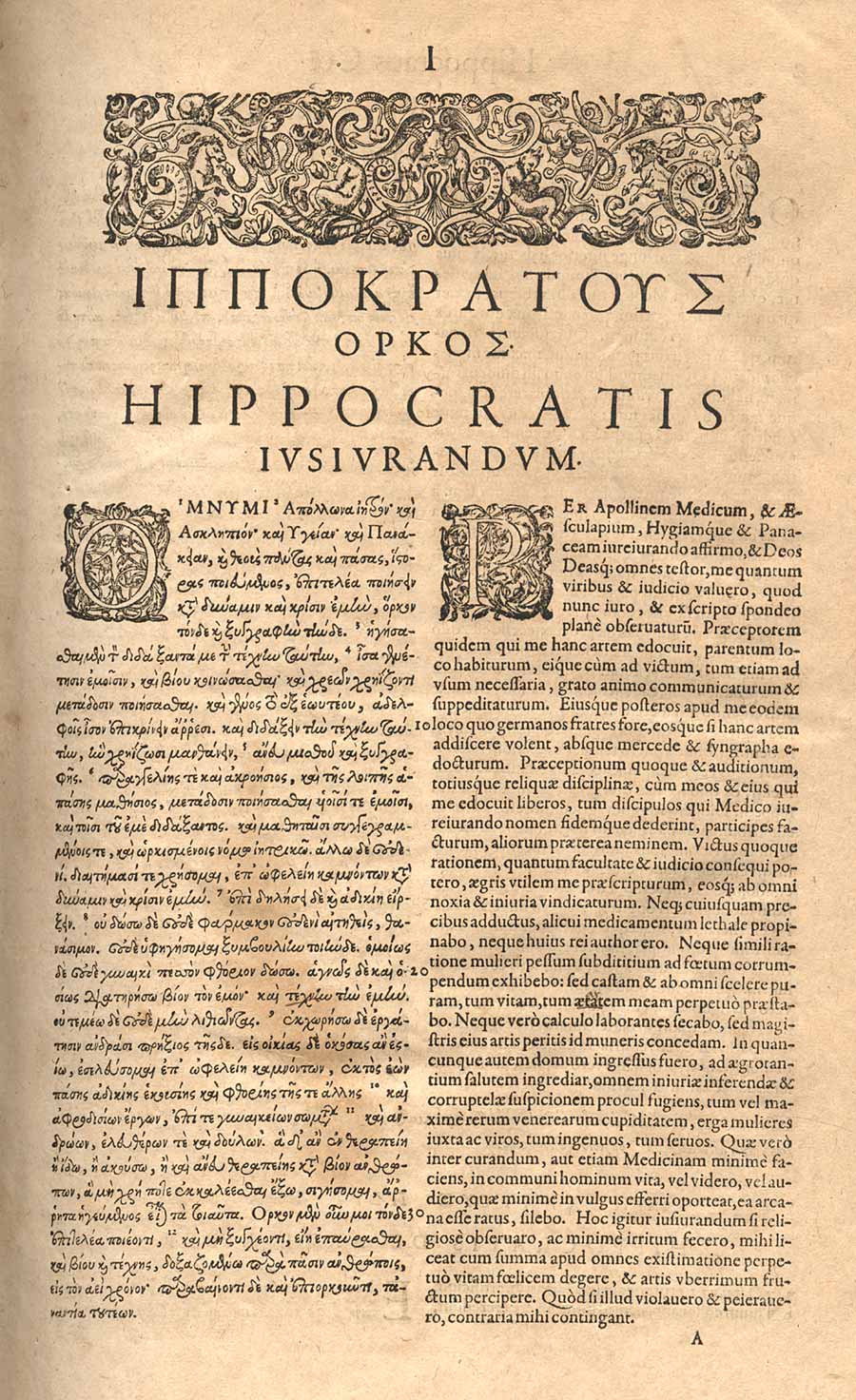
English: The Hippocratic Oath in Greek and Latin published in Frankfurt in 1595 in Apud Andreae Wecheli heredes by Claudium Marnium, & Ioan. Aubrium
Hippocratic Oath
Doctors know days take the Hippocratic Oath before they begin practicing medicine. The oath credited to Hippocrates states:

"I swear by Apollo, the healer, Asclepius, Hygieia, and Panacea, and I take to witness all the gods, all the goddesses, to keep according to my ability and my judgment, the following Oath and agreement:

To consider dear to me, as my parents, him who taught me this art; to live in common with him and, if necessary, to share my goods with him; To look upon his children as my own brothers, to teach them this art; and that by my teaching, I will impart a knowledge of this art to my own sons, and to my teacher's sons, and to disciples bound by an indenture and oath according to the medical laws, and no others.

I will prescribe regimens for the good of my patients according to my ability and my judgment and never do harm to anyone. 

I will not give a lethal drug to anyone if I am asked, nor will I advise such a plan; and similarly I will not give a woman a pessary to cause an abortion. But I will preserve the purity of my life and my arts.I will not cut for stone, even for patients in whom the disease is manifest; I will leave this operation to be performed by practitioners, specialists in this art. 
In every house where I come I will enter only for the good of my patients, keeping myself far from all intentional ill-doing and all seduction and especially from the pleasures of love with women or with men, be they free or slaves.
All that may come to my knowledge in the exercise of my profession or in daily commerce with men, which ought not to be spread abroad, I will keep secret and will never reveal.
If I keep this oath faithfully, may I enjoy my life and practice my art, respected by all humanity and in all times; but if I swerve from it or violate it, may the reverse be my life."(http://en.wikipedia.org/wiki/Hippocratic_Oath). I believe the highlighted parts of this should be followed whole heartily by all who presume to give counsel in healing the body. According to Doctor David Christopher in his course the vitalist videos has taught that Hippocrtes lived on a island and because of his practice of medicine as described bove the island was disease free for two years because he taught the people to eat healthy as well as  the methods that he used in practice  of medicine. My humble belief  is if we where to live in this way there would be a the least less disorders in our life.